The race for virality has never been louder. Every platform rewards speed. Every tool promises instant content. Every trend offers a shortcut to visibility. Yet for all the noise, very little of it converts. Awareness spikes and then dissolves. Attention surges and then slips away. Virality is a sugar high. It delivers energy for a moment, then leaves brands exactly where they started.
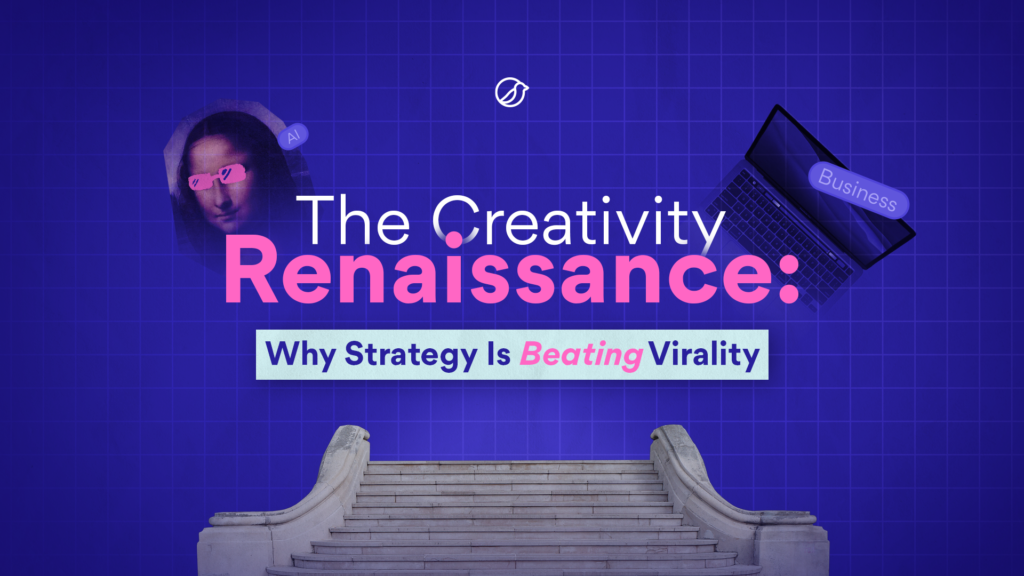
The Creativity Renaissance is the counter movement. It is the shift from reactive content to creative strategy. It is the moment teams realize that sustainable growth depends on disciplined thinking, not sudden explosions of reach.
While viral content may create temporary buzz, strategic creativity creates lasting business value. Research on viral campaigns shows that results are unpredictable and often fail to build long term brand strength (Lekhanya, 2014). Even when attention rises, brand perception often stays flat or becomes inconsistent. In contrast, brands that commit to consistent creative identity see stronger long term performance and higher revenue growth (Funnel.io, 2025).
Virality is a gamble. Strategy is a system.
What Strategic Creativity Delivers
Strong creative discipline produces reliable performance gains. The most consistent ones tend to appear in five areas.
- Faster decision making
- Sharper brand identity
- Higher creative consistency
- Better alignment across teams
- Content that contributes to growth, not just reach
Strategic creativity gives teams a shared foundation. It defines how the brand thinks, speaks, and shows up. This reduces rework and eliminates the drift that makes messages feel unstable. It also builds trust. Consumers reward brands that express themselves with consistency and purpose. In one study, 82 percent of people said they prefer companies whose values show up cohesively across touchpoints (Salesforce, 2024).
In other words, creativity that is rooted in strategy does more than entertain. It signals reliability. It sets expectations. It strengthens confidence.
And confidence is what converts.
Why This Moment Matters
Marketing environments are fragmenting faster than brands can adapt. Platforms evolve. Algorithms shift. Consumer attention narrows. Tactics that worked last year feel tired today. In this kind of landscape, chasing virality is the marketing equivalent of betting on weather patterns. You might catch lightning once, but you cannot build a business on storms.
Strategic creativity offers something different. It delivers traction that survives trend cycles. It allows content to scale without losing coherence. It helps customers understand what a brand stands for and why it matters. While everyone else is sprinting toward the next short term spike, strategic brands build momentum that compounds.
This is the Creativity Renaissance. Not a return to creativity for entertainment, but a return to creativity as leadership. As an intention. As the operating system behind growth.
Conclusion
The brands that win in 2026 will not be the ones that go viral. They will be the ones that know who they are and express it with purpose. They will be the ones that direct creativity instead of chasing hype. They will be the ones that treat creativity as strategy.
Intentional creative direction keeps your brand recognizable, strengthens every channel you invest in, and turns marketing work into business value. If your growth feels inconsistent or your content feels scattered, the issue may not be output. It may be the absence of a strategic creative foundation.
If you are ready to replace noise with direction and build creative systems that actually move the business forward, Rosy Finch can help you shape the next stage.