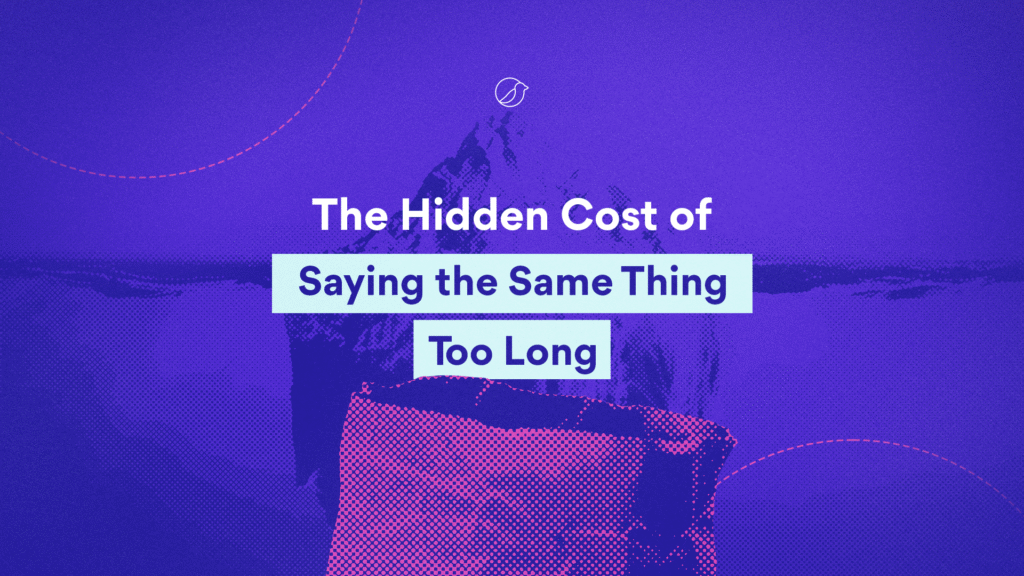
In growth marketing, consistency builds recognition and trust. But when consistency turns into repetition, it quietly starts costing you. Saying the same thing for too long makes your brand predictable, your content invisible, and your performance weaker. It is not just a creative problem. It is a business problem.
When Your Audience Stops Hearing You
Every message has a life cycle. At first, it captures attention and drives engagement. But eventually, the same words start to lose meaning. Audiences stop noticing your campaigns, even when they perform well on paper.
You might still get impressions and clicks, but those metrics mask a deeper issue: your story no longer moves people. You are being seen, not heard.
When attention drops, everything else follows. Ads fatigue faster. Social engagement slows down. Even loyal followers start to scroll past. The message that once fueled growth begins to hold it back.
The Technical Side of Repetition
Search engines and ad platforms do not just reward good content; they reward freshness and diversity. When your message and creative stay the same, your performance signals weaken over time.
Old pages that once ranked well start to fall as Google prioritizes newer, more relevant content. Ads that repeat the same message lose their quality score, meaning you pay more for less reach. Even your website’s crawl rate can decrease because the algorithm no longer finds new material to index.
What feels like a creative plateau becomes a technical slowdown. You can find more on how Google evaluates freshness in their Search Central documentation.
The Internal Impact on Teams and Growth
Repetition affects people as much as algorithms. When teams keep producing the same message, energy drops. Creative work feels mechanical. Sales conversations lose spark. Marketing becomes a cycle of repeating what once worked instead of discovering what will work next.
That sameness limits growth. The brand stops adapting to new audience insights, competitive shifts, or changes in market behavior. Lead quality declines, acquisition costs rise, and teams start competing on features or price instead of story and differentiation.
This is exactly the kind of pattern the Rosy Finch Method™ helps uncover. The RFMC framework aligns marketing, sales, and operations around a message that evolves with your growth, not against it.
How to Know It Is Time to Refresh
You do not need to see a full drop in performance to recognize the early warning signs. If your campaigns feel repetitive, if your metrics look stable but not improving, or if your creative reviews start to sound like déjà vu, it is time to reexamine your message.
When your story feels too familiar to your own team, your audience has probably felt that way for months.
How to Refresh Your Message Without Losing Consistency
Refreshing your message does not mean reinventing your brand. It means finding new ways to make your story relevant again. Here are three practical steps to keep your message evolving without losing consistency:
- Diagnose where it stopped evolving:
Look across your website, campaigns, and sales materials. If your content keeps repeating the same idea in different words, your message is stuck. Many times, the issue is operational, not creative. Reviewing execution gaps can reveal where alignment broke down. - Reconnect your message to current audience needs:
Markets change faster than most brand narratives do. Ask what has shifted in your customers’ world that you have not addressed yet. Use new insights and proof points to refresh how your story sounds and what it stands for. - Create a rhythm for renewal:
Strong brands build systems to stay relevant. Schedule regular message reviews, quarterly for creative performance, annually for brand positioning. Keeping this rhythm prevents stagnation and keeps consistency alive.
When message renewal becomes part of your operating rhythm, you stop reacting to change and start leading it. That is how consistency turns from repetition into resilience.
The Real Cost of Staying the Same
Keeping the same message may feel like stability, but it quietly creates friction across your growth engine. The cost is not just creative fatigue; it shows up in your performance metrics.
As your story stops evolving, algorithms treat your content as outdated. Reach declines, cost per click rises, and organic visibility fades. Internally, teams feel it too. Marketing spends more to keep the same results, creative energy drops, and sales conversations lose power.
The real cost is not what you spend, but what you stop earning:attention, trust, and relevance. What looks like consistency is often the slow erosion of growth.
Conclusion
Every message has an expiration date. The most resilient brands know how to evolve theirs before the audience moves on.
Refreshing your story regularly keeps your brand relevant, improves technical performance, and restores internal alignment. It helps you stay visible, credible, and alive in the eyes of both algorithms and people.
If your growth feels stuck, it might not be your strategy or your budget. It might be your message.
Book a strategy session and take the first step toward your next stage.